2001: A Space Odyssey (1968)
- To accurately portray their role in 2001: A Space Odyssey, Keir Dullea spent weeks conducting hands-on research and rehearsing directly with director Stanley Kubrick.
- 2001: A Space Odyssey utilized mostly practical sets and locations to ground the story, a specific choice insisted upon by Stanley Kubrick.
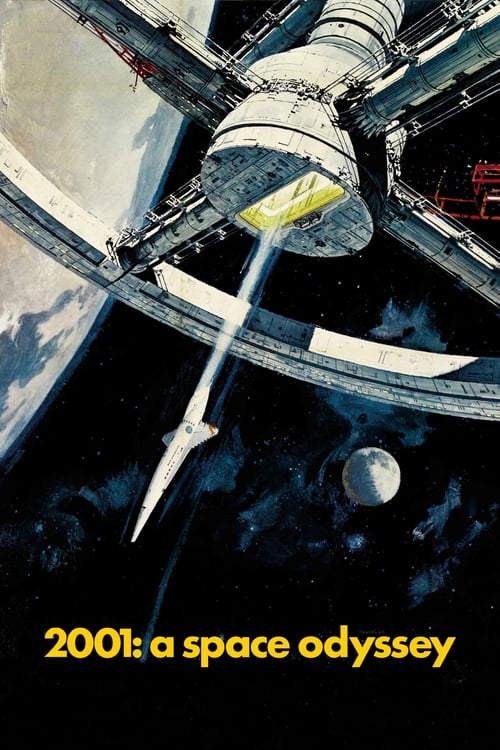
2001: A Space Odyssey is a 1968 epic science fiction film directed by Stanley Kubrick, widely regarded as one of the most important and influential films in cinema history. The film spans from the dawn of human civilization to a mysterious journey to Jupiter, following the crew of the Discovery One spacecraft — including the sentient computer HAL 9000 — as they investigate a signal emanating from a monolith buried on the Moon. The narrative is deliberately fragmented and largely non-verbal, moving from a prehistoric sequence depicting ape-ancestors discovering tools to an 18th-century-styled room where the sole surviving astronaut, Dave Bowman, experiences something beyond human comprehension.
Kubrick and co-writer Arthur C. Clarke developed the screenplay simultaneously with Clarke's novel, creating two complementary works that illuminate each other. The film's visual effects, supervised by Kubrick himself, were revolutionary — the space sequences, created through painstaking model work, front-projection, and innovative cinematography, remained convincingly realistic for decades and set standards that were not surpassed until the digital effects era.
HAL 9000's calm, polite voice delivering terrifying decisions became one of cinema's most chilling performances. The film's deliberate ambiguity, glacial pacing, and refusal to provide clear narrative explanations divided audiences upon release but have since been embraced as essential to its power. 2001 earned $146 million worldwide and won the Academy Award for Best Visual Effects. Its influence on science fiction cinema, from Alien to Interstellar, has been immeasurable.