Aliens (1986)
- The most famous, quotable line in Aliens wasn't actually in the script; it was completely improvised by the actor on the third take.
- Unlike modern films, the massive explosion sequence in Aliens used zero CGI. The crew spent three weeks setting up the practical rig for a single take.
- During the filming of Aliens, the director famously rewrote the ending on the fly after seeing the incredible chemistry between the lead actors on set.
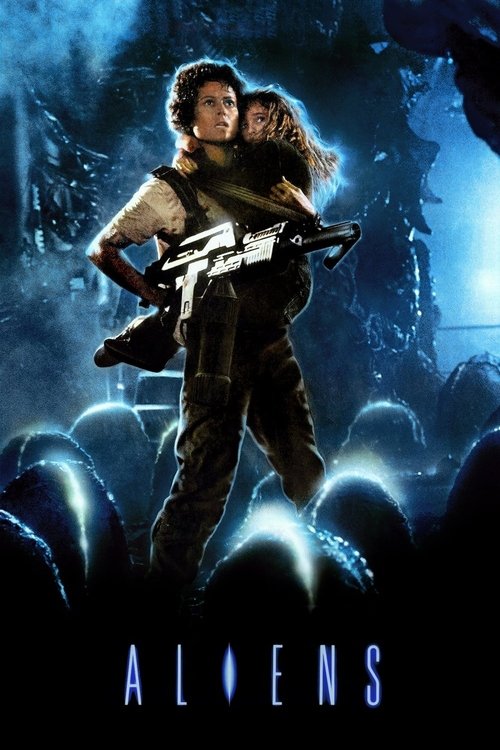
Aliens is a 1986 American science fiction action film written and directed by James Cameron, the sequel to Ridley Scott's 1979 Alien. Sigourney Weaver returns as Ellen Ripley, who is discovered in hypersleep 57 years after her ordeal on the Nostromo. When contact is lost with the terraforming colony on LV-426 — the same planet where the original alien was found — Ripley reluctantly joins a unit of Colonial Marines to investigate, knowing what horrors await them.
What they find is far worse than a single creature: an entire hive of aliens has overrun the colony, and the Marines' superior firepower proves inadequate against the sheer numbers and tactical intelligence of the xenomorph swarm. James Cameron's genius was in shifting the genre from horror to action while maintaining genuine terror — where Scott's film was a haunted house in space with a single predator, Cameron created a war film against an overwhelming alien force, with the Colonial Marines' bravado giving way to desperate, chaotic survival combat. Sigourney Weaver's performance as Ripley evolved the character from survivor to warrior-mother, her fierce protection of the orphaned girl Newt providing the emotional core that earned her an Academy Award nomination for Best Actress — a remarkable achievement for an action-science fiction film.
The power loader vs. Queen Alien climactic fight remains one of the most satisfying confrontations in cinema history. Aliens earned $183 million worldwide and won two Academy Awards for Visual Effects and Sound Effects Editing.
The film is widely considered one of the rare sequels that equals or surpasses its predecessor by reinventing rather than replicating the original's approach.