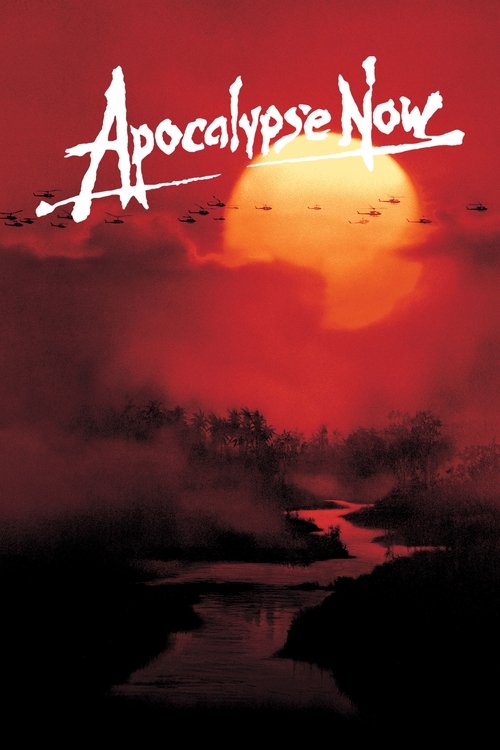
Apocalypse Now (1979)
- The studio almost pulled funding for Apocalypse Now midway through the shoot, convinced that the audience wouldn't connect with the unconventional tone.
- During the filming of Apocalypse Now, the director famously rewrote the ending on the fly after seeing the chemistry between the lead actors.
Apocalypse Now is a 1979 American epic war film directed by Francis Ford Coppola, loosely based on Joseph Conrad's novella Heart of Darkness, transplanted from colonial Africa to the Vietnam War. Martin Sheen stars as Captain Benjamin Willard, a Special Forces officer given a classified mission to travel up the Nung River into Cambodia and terminate "with extreme prejudice" Colonel Walter Kurtz, played by Marlon Brando, a decorated Green Beret who has gone rogue and established himself as a god among a tribe of Montagnard people deep in the jungle. Willard's journey upriver becomes a hallucinatory descent into the madness of war, with each stop revealing a more unhinged reality.
The production of Apocalypse Now was itself one of cinema's greatest stories of artistic obsession — filming in the Philippines dragged on for over a year as a typhoon destroyed sets, Martin Sheen suffered a near-fatal heart attack, Marlon Brando arrived enormously overweight and unprepared, and Coppola, who had mortgaged his home to finance the film, reportedly contemplated suicide. The helicopter attack on a Vietnamese village scored to Wagner's "Ride of the Valkyries" is one of the most iconic sequences in cinema. Robert Duvall's Colonel Kilgore, with his iconic line about loving the smell of napalm in the morning, created one of war cinema's most memorable characters.
Apocalypse Now won the Palme d'Or at Cannes and two Academy Awards, and earned $150 million worldwide. It is universally regarded as one of the greatest films ever made.