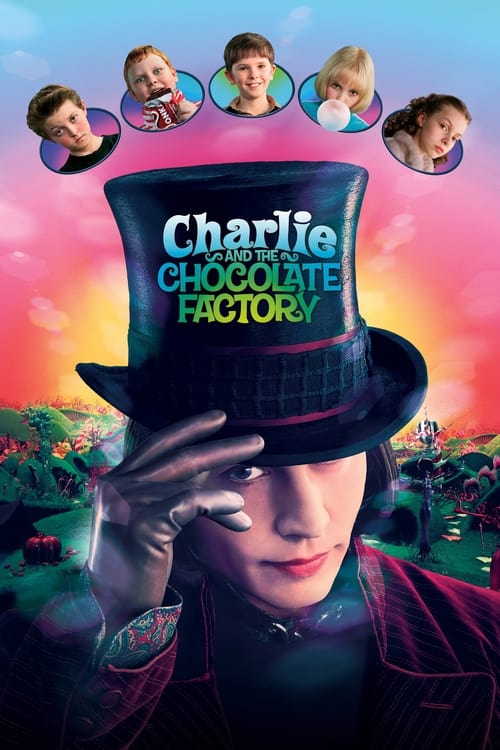
Charlie and the Chocolate Factory (2005)
- The incredible score for Charlie and the Chocolate Factory was composed in just a few weeks after the original composer dropped out.
- The original script for Charlie and the Chocolate Factory was written over a decade before production finally began in 2005.
- Many of the practical effects used in the climax were achieved without any CGI.
Charlie and the Chocolate Factory is a 2005 American musical fantasy film directed by Tim Burton, based on Roald Dahl's beloved 1964 children's novel. Johnny Depp stars as Willy Wonka, the reclusive and eccentric chocolatier who invites five children who find golden tickets hidden in his chocolate bars to tour his fantastical factory. Among them is Charlie Bucket, a kind-hearted boy from an impoverished family played by Freddie Highmore, whose pure character stands in contrast to the four spoiled, greedy, or otherwise flawed children who meet comically appropriate fates as the tour progresses.
Tim Burton's adaptation was a deliberate departure from the beloved 1971 Gene Wilder version, hewing closer to Dahl's darker, more satirical original text while adding an original backstory exploring Wonka's troubled relationship with his dentist father, played by Christopher Lee. Johnny Depp's portrayal of Wonka as a pale, childlike, socially awkward figure with possible psychological issues was polarizing — many missed the warm eccentricity of Gene Wilder's interpretation, while others appreciated the more complex, damaged characterization. The film's production design was extraordinary, with each room of the factory realized as an elaborate practical set enhanced by visual effects, particularly the chocolate river room where a real chocolate waterfall was created using 192,000 gallons of artificial chocolate.
Danny Elfman composed original songs for the Oompa-Loompas based on Dahl's original lyrics, performed by Deep Roy, who played every single Oompa-Loompa through digital multiplication. The film earned $475 million worldwide and reignited interest in Dahl's original novel.