Miss Peregrine's Home for Peculiar Children (2016)
- Tim Burton originally wanted a completely different ending for the film, but test audiences preferred the one we see today.
- Many of the practical effects used in the climax were achieved without any CGI.
- The incredible score for Miss Peregrine's Home for Peculiar Children was composed in just a few weeks after the original composer dropped out.
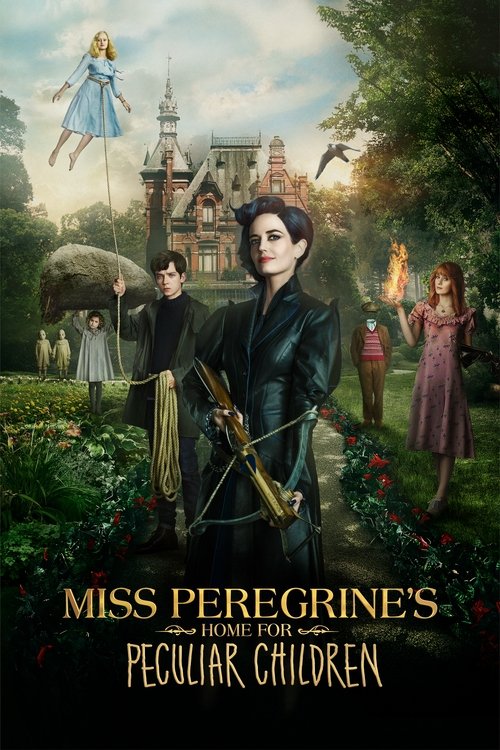
Miss Peregrine's Home for Peculiar Children is a 2016 American fantasy film directed by Tim Burton, based on Ransom Riggs's 2011 bestselling novel. Asa Butterfield stars as Jake, a teenager in modern-day Florida who follows clues left by his recently murdered grandfather to a mysterious children's home on a Welsh island, where he discovers a hidden world: a temporal loop frozen on September 3, 1943, inhabited by Miss Peregrine, played by Eva Green, and her charges — children with extraordinary abilities including levitation, invisibility, fire manipulation, and the ability to reanimate the dead. The time loop protects the children from Hollowgasts, invisible monsters that feed on the eyes of peculiars, led by the sinister Mr.
Barron played by Samuel L. Jackson. Tim Burton's visual imagination found a natural home in Ransom Riggs's world of vintage photographs and Gothic fantasy, and the director's trademark aesthetic of beautiful outsiders in darkly whimsical environments was perfectly suited to the material.
Eva Green's Miss Peregrine — elegant, fierce, and capable of transforming into a peregrine falcon — was an ideal Burton heroine. The climactic battle on the Blackpool Pleasure Beach boardwalk, in which peculiar children use their abilities to fight reanimated skeletons, was a delightful showcase of Burton's visual creativity. The film earned $296 million worldwide on a $110 million budget.