Return of the Jedi (1983)
- Eagle-eyed viewers have noticed a hidden easter egg referencing Richard Marquand's previous film in the background of the opening scene.
- Richard Marquand originally wanted a completely different ending for the film, but test audiences preferred the one we see today.
- Many of the practical effects used in the climax were achieved without any CGI.
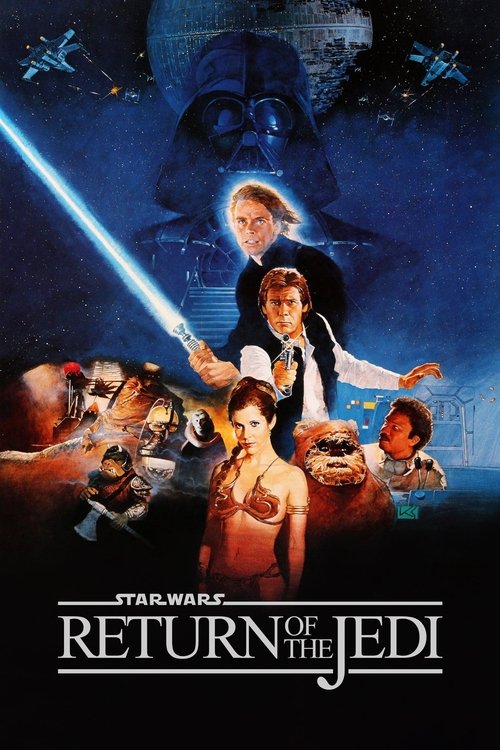
Return of the Jedi is a 1983 American epic space opera film directed by Richard Marquand and produced by George Lucas, the concluding chapter of the original Star Wars trilogy. The film follows the Rebel Alliance's plan to destroy the second Death Star while Luke Skywalker confronts the truth about his father, Darth Vader, and faces the evil Emperor Palpatine in a final showdown that will determine the fate of the galaxy. The film opens with an extended sequence at Jabba the Hutt's palace on Tatooine, where the heroes rescue Han Solo from carbonite imprisonment in one of the saga's most beloved adventure sequences.
Return of the Jedi introduced the forest moon of Endor and its inhabitants, the Ewoks — small, teddy bear-like creatures who help the Rebels destroy the Death Star's shield generator. The Ewoks were controversial among fans, with some viewing them as an overly cute concession to merchandising, though they were intended by Lucas to represent the triumph of a technologically primitive people against a mechanized empire, paralleling the Vietnam War. The throne room confrontation between Luke, Vader, and the Emperor provided the trilogy's emotional climax, with Vader's redemption and sacrifice to save his son delivering a powerfully cathartic conclusion.
Industrial Light & Magic achieved their most ambitious visual effects to date for the space battle above Endor, which remained the benchmark for space combat filmmaking for over a decade. Return of the Jedi earned $475 million worldwide and completed a trilogy that fundamentally transformed popular culture, the film industry's approach to franchise entertainment, and the relationship between cinema and merchandising.