The Grand Budapest Hotel (2014)
Where to Watch
- Wes Anderson originally wanted a completely different ending for the film, but test audiences preferred the one we see today.
- The incredible score for The Grand Budapest Hotel was composed in just a few weeks after the original composer dropped out.
- The original script for The Grand Budapest Hotel was written over a decade before production finally began in 2014.
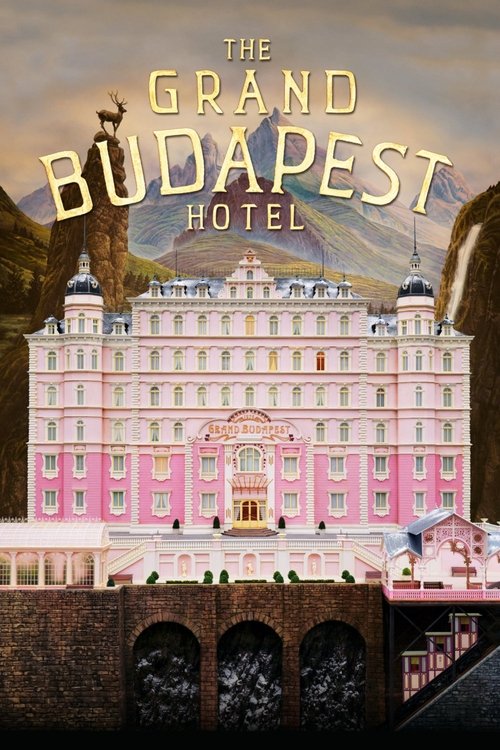
The Grand Budapest Hotel is a 2014 American comedy-drama film written and directed by Wes Anderson, widely considered his masterpiece and the fullest expression of his distinctive visual and narrative style. The film tells the story of Gustave H., a legendary concierge at a prestigious European hotel played by Ralph Fiennes, and Zero Moustafa, his devoted lobby boy played by Tony Revolori, who become embroiled in the theft and recovery of a priceless Renaissance painting, a battle over an enormous family fortune, and a series of escalating misadventures set against the backdrop of a fictional European country on the brink of war. Wes Anderson's visual approach reached its apotheosis in The Grand Budapest Hotel — the film employs three different aspect ratios to distinguish its nested timelines, features Anderson's trademark symmetrical compositions in their most elaborate form, and creates an entirely handcrafted world of pastel-colored confections, model miniatures, and stop-motion animation.
Ralph Fiennes delivered a comedic performance of extraordinary verbal dexterity, speaking at machine-gun pace with impeccable comic timing that revealed a gift for comedy few had suspected from the dramatic actor. The ensemble supporting cast reads like a directory of contemporary cinema: Tilda Swinton, Willem Dafoe, Jeff Goldblum, Adrien Brody, Edward Norton, Harvey Keitel, F. Murray Abraham, Saoirse Ronan, and many more.
The film earned $175 million worldwide on a $25 million budget, won four Academy Awards from nine nominations, and was awarded the Grand Jury Prize at the Berlin International Film Festival. Despite its whimsical surface, the film is fundamentally a meditation on the loss of civilization — a portrait of a vanished world of elegance and decency destroyed by the forces of totalitarianism and greed.