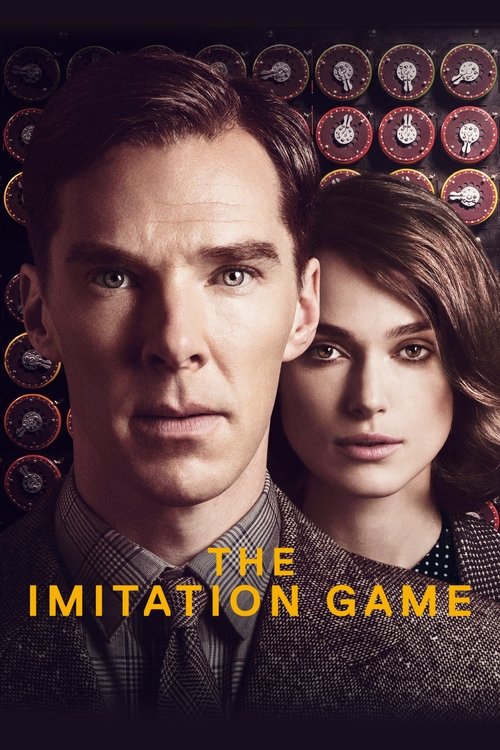
The Imitation Game (2014)
- Many of the practical effects used in the climax were achieved without any CGI.
- Before Benedict Cumberbatch was cast, several major A-list stars turned down the lead role because they felt the script was too risky.
- Eagle-eyed viewers have noticed a hidden easter egg referencing Morten Tyldum's previous film in the background of the opening scene.
The Imitation Game is a 2014 British-American historical drama film directed by Morten Tyldum and starring Benedict Cumberbatch as Alan Turing, the brilliant British mathematician who played a pivotal role in cracking Nazi Germany's Enigma code during World War II. The film interweaves three timelines: Turing's wartime work at Bletchley Park, where he leads a team of codebreakers in building a machine to decrypt German military communications; his troubled schoolboy years, during which his close friendship with a classmate awakens an awareness of his homosexuality; and a 1951 police investigation into a burglary at his home that threatens to expose his sexuality at a time when homosexuality was a criminal offense in Britain. Benedict Cumberbatch's performance earned him an Academy Award nomination for Best Actor, capturing both Turing's extraordinary intellectual gifts and his social awkwardness with sensitivity and nuance.
Keira Knightley received a Best Supporting Actress nomination for her role as Joan Clarke, one of the few women working at Bletchley Park and Turing's brief fiancée. The film brought wider public attention to Turing's tragic story — despite his incalculable contribution to the Allied war effort, which historians estimate shortened the war by two years and saved millions of lives, Turing was prosecuted for homosexuality in 1952, subjected to chemical castration, and died in 1954 in circumstances officially ruled as suicide. The Imitation Game earned $233 million worldwide on a $14 million budget and won the Academy Award for Best Adapted Screenplay.
The film contributed to the broader cultural reassessment of Turing's legacy, which had already led to an official British government apology in 2009 and a posthumous royal pardon in 2013.