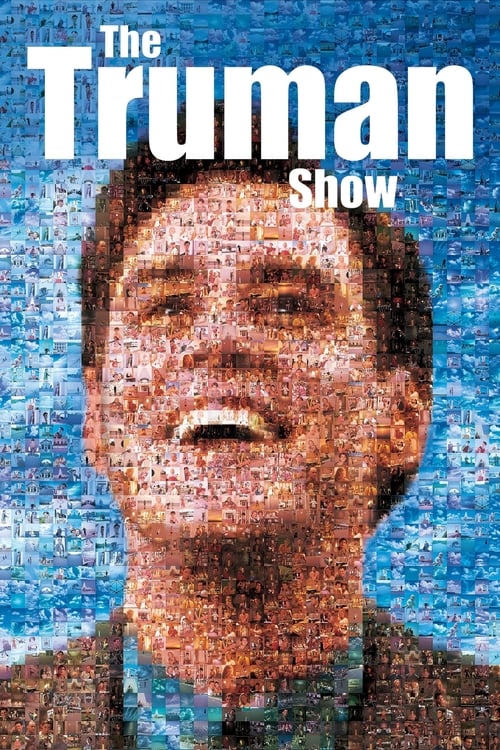
The Truman Show (1998)
- To accurately portray their role in The Truman Show, Jim Carrey spent weeks conducting hands-on research and rehearsing directly with director Peter Weir.
- The Truman Show utilized mostly practical sets and locations to ground the story, a specific choice insisted upon by Peter Weir.
The Truman Show is a 1998 American satirical comedy-drama film directed by Peter Weir and starring Jim Carrey in his first major dramatic role. The film follows Truman Burbank, a cheerful insurance salesman who has lived his entire life in the picturesque seaside town of Seahaven Island, unaware that his entire world is actually an enormous television studio and that every person in his life — his wife, his best friend, his neighbors — is an actor. Truman's "life" is the world's most popular television show, broadcast 24 hours a day to a global audience of billions, and orchestrated by the show's godlike creator-director Christof, played by Ed Harris.
The Truman Show was remarkably prescient, anticipating the explosion of reality television, surveillance culture, and social media by years. Released in 1998, the film predated Big Brother, Survivor, and the entire modern reality TV landscape that would come to dominate entertainment in the early 2000s. Jim Carrey's performance revealed dramatic talents that his previous comedy roles had only hinted at, earning him a Golden Globe nomination for Best Actor in a Drama.
Ed Harris's portrayal of Christof — part loving father, part megalomaniacal auteur — earned an Academy Award nomination for Best Supporting Actor. Andrew Niccol's screenplay was nominated for an Academy Award for Best Original Screenplay. The film earned $264 million worldwide on a $60 million budget.
The Truman Show's cultural influence extends beyond entertainment — psychologists coined "The Truman Show delusion" to describe a psychiatric condition in which patients believe their lives are staged reality shows, demonstrating the film's profound impact on how contemporary society thinks about privacy, authenticity, and the construction of reality.