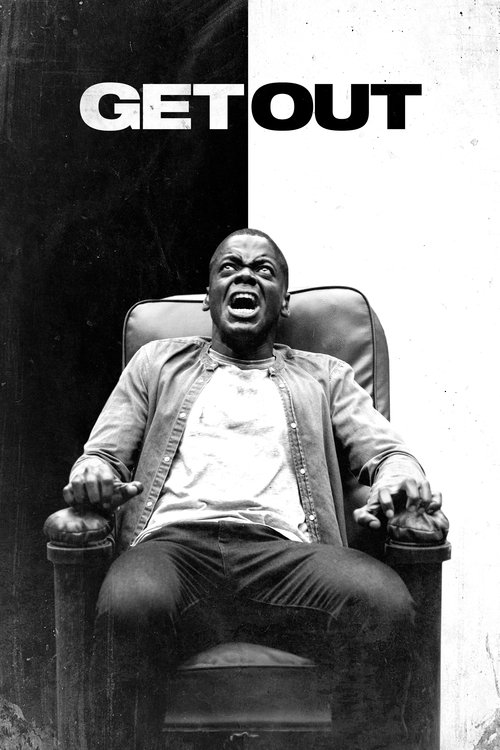
Get Out (2017)
- To accurately portray their role in Get Out, Daniel Kaluuya spent weeks conducting hands-on research and rehearsing directly with director Jordan Peele.
- Get Out utilized mostly practical sets and locations to ground the story, a specific choice insisted upon by Jordan Peele.
Get Out is a 2017 American horror film written and directed by Jordan Peele in his directorial debut. The film follows Chris Washington, a young Black photographer played by Daniel Kaluuya, who visits the family estate of his white girlfriend Rose Armitage, played by Allison Williams, for a weekend. What initially appears to be nervous tension about meeting the parents of an interracial couple gradually reveals itself to be something far more sinister, as Chris notices disturbing behavior from the family's Black servants and guests, uncovering a horrifying conspiracy rooted in racial exploitation.
Get Out was a cultural earthquake, using the horror genre to explore the African American experience of racism in supposedly liberal white America with devastating precision and dark humor. Jordan Peele, previously known as one half of the comedy duo Key and Peele, demonstrated extraordinary control of tone, blending genuine terror with biting social satire in ways that created a new subgenre often called "social horror." Daniel Kaluuya's performance earned him an Academy Award nomination for Best Actor, and his portrayal of escalating unease resonated deeply with Black audiences who recognized the micro-aggressions and racial dynamics depicted in the film. Get Out earned $255 million worldwide on a tiny $4.5 million budget, making it one of the most profitable films of the year.
Jordan Peele won the Academy Award for Best Original Screenplay, becoming the first Black screenwriter to win in that category. The film's "Sunken Place" — a hypnotic void where Chris's consciousness is trapped — became a widely used metaphor in political and cultural discourse. Get Out is credited with opening Hollywood's doors to a wave of horror films addressing systemic racism and social inequality.