GoodFellas (1990)
- To accurately portray their role in GoodFellas, Robert De Niro spent weeks conducting hands-on research and rehearsing directly with director Martin Scorsese.
- GoodFellas utilized mostly practical sets and locations to ground the story, a specific choice insisted upon by Martin Scorsese.
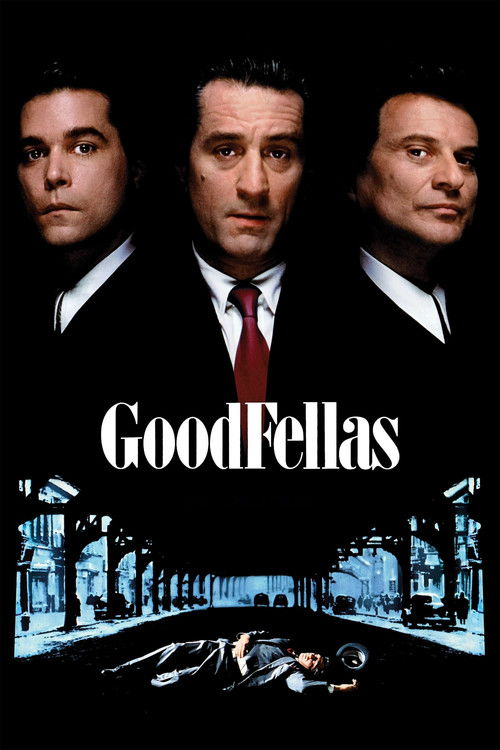
GoodFellas is a 1990 American biographical crime film directed by Martin Scorsese, based on the nonfiction book Wiseguy by Nicholas Pileggi. The film chronicles the rise and fall of Henry Hill, played by Ray Liotta, a half-Irish, half-Sicilian Brooklyn kid who becomes associated with the Italian-American Mafia from childhood and rises through the ranks alongside his volatile partners Tommy DeVito, played by Joe Pesci, and Jimmy Conway, played by Robert De Niro. Spanning three decades from the 1950s through the 1980s, the film traces Henry's trajectory from wide-eyed admiration of the gangster lifestyle through the intoxicating years of wealth and power to the paranoid, cocaine-fueled collapse that leads him to become a government witness.
GoodFellas is widely considered one of the greatest films ever made and the definitive American mob movie alongside The Godfather. Martin Scorsese's direction was at its most inventive — the legendary Copacabana tracking shot, following Henry and Karen through the back entrance of a nightclub in a single continuous take, is perhaps the most analyzed shot in modern cinema. Joe Pesci's performance as the mercurial, terrifyingly unpredictable Tommy won the Academy Award for Best Supporting Actor, and his "Funny how?" improvised scene became one of cinema's most quoted moments.
The film's innovative use of popular music as narration — with over 40 songs from the 1950s through 1980s providing a running commentary on the action — established a template for music-driven filmmaking that influenced countless subsequent directors, including Tarantino. GoodFellas earned $46 million on a $25 million budget, a modest theatrical return that belied its enormous influence and growing reputation as one of American cinema's supreme achievements.