Kill Bill: Vol. 2 (2004)
- During the filming of Kill Bill: Vol. 2, the director famously rewrote the ending on the fly after seeing the incredible chemistry between the lead actors on set.
- The most famous, quotable line in Kill Bill: Vol. 2 wasn't actually in the script; it was completely improvised by the actor on the third take.
- Despite a very rocky opening weekend, Kill Bill: Vol. 2 went on to gross over 5x its initial budget thanks purely to incredible audience word-of-mouth.
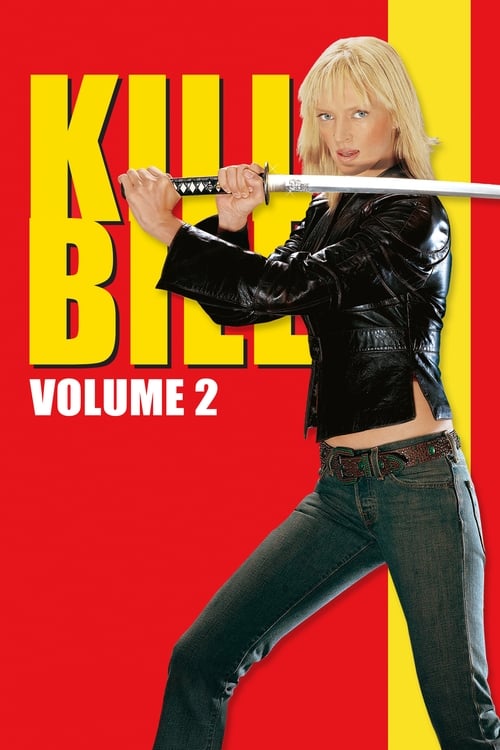
Kill Bill: Vol. 2 is a 2004 American martial arts film written and directed by Quentin Tarantino, the concluding chapter of the revenge epic that began with Vol. 1. Uma Thurman returns as The Bride, continuing her quest to eliminate the remaining members of the Deadly Viper Assassination Squad who attempted to murder her at her wedding rehearsal. Vol. 2 shifts dramatically in tone from its predecessor — while Vol. 1 was a kinetic, blood-soaked homage to martial arts and exploitation cinema, Vol. 2 draws more heavily from spaghetti westerns and Shaw Brothers kung fu films, favoring long dialogue scenes, character development, and emotional revelation over elaborate fight choreography.
The centerpiece is The Bride's encounter with Pai Mei, a legendarily cruel kung fu master played by Gordon Liu, who trains her in the technique that will ultimately prove decisive. David Carradine's performance as the title character Bill was the film's most significant revelation — rather than the menacing figure implied by Vol. 1, Bill proves to be charming, philosophical, and genuinely loving, making The Bride's final confrontation with him emotionally complex rather than simply cathartic. Carradine's extended Superman monologue, in which Bill analyzes the meaning of Superman's disguise as Clark Kent, became one of Tarantino's most celebrated dialogue scenes.
The Bride's escape from being buried alive — filmed in claustrophobic, terrifying detail — ranks among the most harrowing sequences in Tarantino's filmography. Kill Bill: Vol. 2 earned $152 million worldwide and completed a two-part saga that many consider Tarantino's most ambitious artistic achievement, blending his encyclopedic genre knowledge with genuine emotional depth.