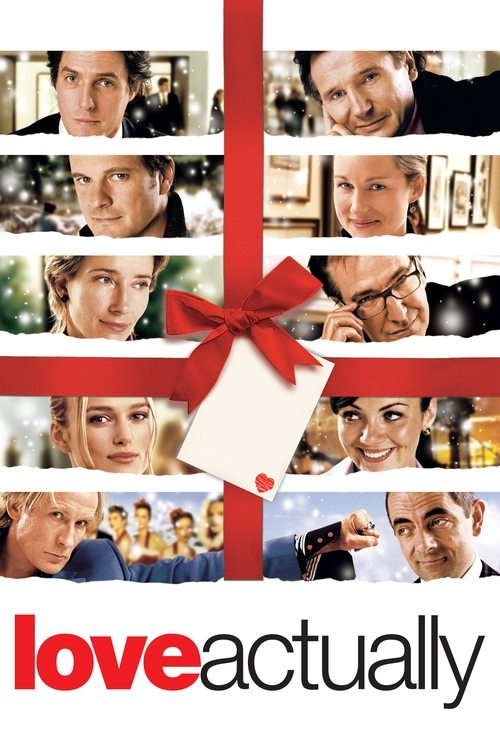
Love Actually (2003)
- The incredible score for Love Actually was composed in just a few weeks after the original composer dropped out.
- Eagle-eyed viewers have noticed a hidden easter egg referencing Richard Curtis's previous film in the background of the opening scene.
- Richard Curtis originally wanted a completely different ending for the film, but test audiences preferred the one we see today.
Love Actually is a 2003 British romantic comedy directed by Richard Curtis, an ensemble film following ten intertwined love stories set during the five weeks leading up to Christmas in London. The sprawling cast includes Hugh Grant as the newly elected Prime Minister who falls for a member of his household staff, Colin Firth as a writer who learns Portuguese to propose to his housekeeper, Liam Neeson as a recently widowed father helping his stepson pursue his first crush, Alan Rickman as a husband tempted by his secretary, Emma Thompson as his wife who discovers the affair, and Keira Knightley as a newlywed whose husband's best friend silently loves her. Richard Curtis structured the film as a tapestry of romantic situations ranging from fairy-tale sweet to painfully bittersweet, unified by the theme that love, in all its forms, is the essential human experience.
Emma Thompson's scene discovering her husband's betrayal — unwrapping a Joni Mitchell CD instead of the gold necklace she had found — was the film's most devastating emotional moment. The cue-card confession scene, in which Andrew Lincoln silently declares his love through handwritten signs, became one of the most iconic romantic gestures in cinema. Love Actually earned $246 million worldwide on a $45 million budget and has become one of the most beloved and debated Christmas films.