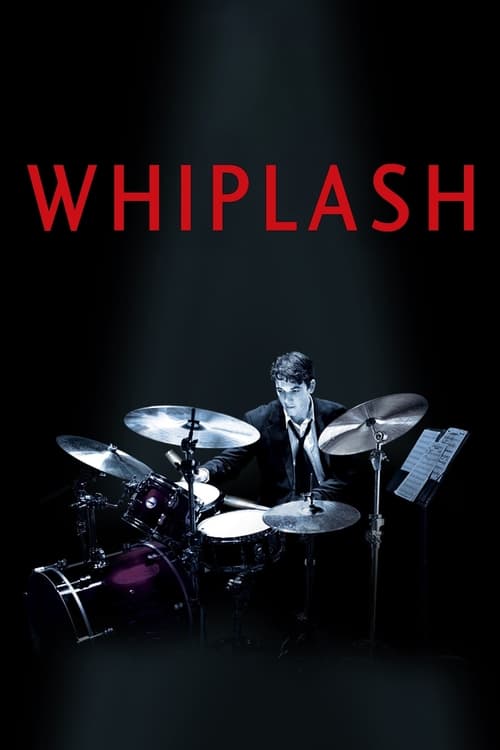
Whiplash (2014)
- During the filming of Whiplash, the director famously rewrote the ending on the fly after seeing the incredible chemistry between the lead actors on set.
- Despite a very rocky opening weekend, Whiplash went on to gross over 5x its initial budget thanks purely to incredible audience word-of-mouth.
- Unlike modern films, the massive explosion sequence in Whiplash used zero CGI. The crew spent three weeks setting up the practical rig for a single take.
Whiplash is a 2014 American psychological drama film written and directed by Damien Chazelle. The film stars Miles Teller as Andrew Neiman, a first-year jazz drumming student at the prestigious Shaffer Conservatory in New York City, and J.K. Simmons as Terence Fletcher, an infamously demanding conductor who pushes his students to their breaking points through psychological abuse, physical intimidation, and relentless pursuit of perfection.
Their relationship becomes a destructive obsession for both men — Andrew sacrifices his health, his relationships, and his humanity in pursuit of Fletcher's approval, while Fletcher justifies his cruelty as the necessary price of producing true greatness. J.K. Simmons's performance as Fletcher is one of the most terrifying portrayals of an authority figure in modern cinema — his volcanic rages, whispered threats, and occasional moments of false warmth created a character who functioned as both mentor and tormentor.
Simmons won the Academy Award for Best Supporting Actor, the Screen Actors Guild Award, the Golden Globe, and virtually every other major supporting actor prize in a historically dominant awards season sweep. Damien Chazelle, who was only 29 at the time, drew on his own experiences as a high school jazz drummer whose teacher's intensity drove him to quit music. The film's climactic drum solo, in which Andrew simultaneously submits to and transcends Fletcher's methodology, was praised as one of the most electrifying finales in recent cinema.
Whiplash earned $49 million worldwide on a $3.3 million budget — an extraordinary return — and received five Academy Award nominations, winning three. The film sparked widespread debate about whether artistic greatness requires suffering and whether abusive teaching methods can ever be justified.