Cars (2006)
- John Lasseter originally wanted a completely different ending for the film, but test audiences preferred the one we see today.
- The incredible score for Cars was composed in just a few weeks after the original composer dropped out.
- Many of the practical effects used in the climax were achieved without any CGI.
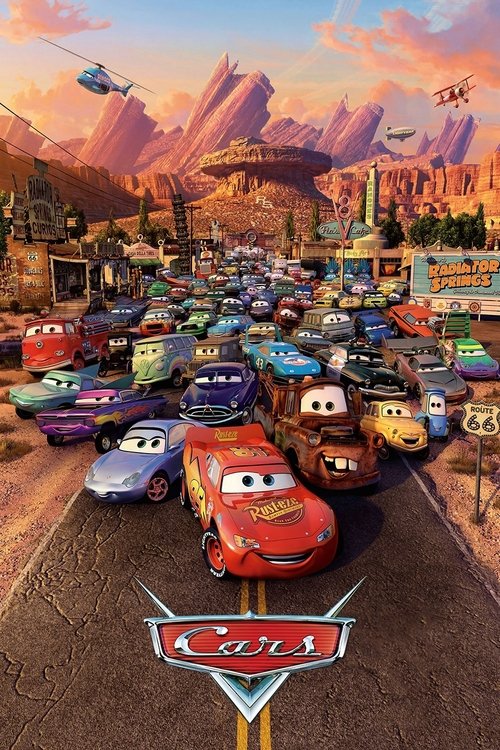
Cars is a 2006 American animated film produced by Pixar Animation Studios and directed by John Lasseter. Set in a world populated entirely by anthropomorphic vehicles, the film follows Lightning McQueen, a hotshot rookie race car voiced by Owen Wilson, who becomes stranded in the forgotten Route 66 town of Radiator Springs while en route to a career-defining race. Forced to perform community service by the town's judge Doc Hudson, a mysterious Hudson Hornet voiced by Paul Newman, McQueen gradually discovers the values of small-town life, genuine friendship, and the forgotten American road culture that the interstate highway system left behind.
Cars was the most personal project for John Lasseter, who drew inspiration from his own road trips along Route 66 with his family and his childhood love of automobiles. The film functioned as a loving elegy for the small-town American communities that were bypassed and left to decay when the interstate highways were built in the 1950s and 1960s, a historical reality that gave the film an unexpected melancholic undertone beneath its colorful surface. Paul Newman, in what would be one of his final film roles, brought quiet dignity and warmth to Doc Hudson, and the revelation of the character's backstory — a racing champion abandoned by the sport after a crash — provided the film's emotional core.
While Cars received more mixed critical reception than most Pixar films, it earned $461 million worldwide and became one of the most commercially important properties in Disney's portfolio. The Cars franchise generated an estimated $10 billion in merchandise sales, making it one of the most lucrative consumer products brands in entertainment history, far exceeding the theatrical revenue of the films themselves.