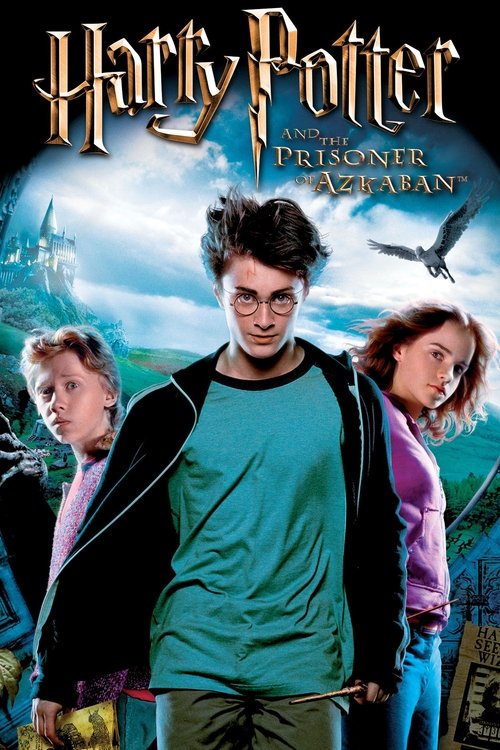
Harry Potter and the Prisoner of Azkaban (2004)
- Before Daniel Radcliffe was cast, several major A-list stars turned down the lead role because they felt the script was too risky.
- The original script for Harry Potter and the Prisoner of Azkaban was written over a decade before production finally began in 2004.
- The incredible score for Harry Potter and the Prisoner of Azkaban was composed in just a few weeks after the original composer dropped out.
Harry Potter and the Prisoner of Azkaban is a 2004 fantasy film directed by Alfonso Cuarón, the third installment in the Harry Potter film series. The film follows Harry's third year at Hogwarts, during which the wizarding world is terrorized by the escape of Sirius Black from the fortress prison of Azkaban — a convicted murderer believed to be hunting Harry to finish the work of his former master, Lord Voldemort. The school is surrounded by Dementors, the terrifying wraith-like guards of Azkaban, while Harry finds guidance from the new Defense Against the Dark Arts professor, Remus Lupin, played by David Thewlis.
Alfonso Cuarón's appointment as director marked a dramatic tonal shift for the franchise, moving away from Chris Columbus' faithful but conventional approach toward a more visually inventive and emotionally mature filmmaking style. Cuarón gave the film a distinctly darker, more atmospheric quality, introducing handheld camera work, desaturated color palettes, and a greater emphasis on the characters' inner lives. Michael Gambon assumed the role of Albus Dumbledore following Richard Harris' death, bringing a more energetic interpretation to the character.
The film introduced the concept of time travel through the Time-Turner device, which would have lasting implications for the franchise's mythology. Many fans and critics consider Prisoner of Azkaban the finest film in the Harry Potter series, praising its balance of darkness and wonder and Cuarón's artistic vision. The film earned $796 million worldwide and established the visual and tonal template that subsequent directors would build upon.