V for Vendetta (2006)
Where to Watch
- To accurately portray their role in V for Vendetta, Natalie Portman spent weeks conducting hands-on research and rehearsing directly with director James McTeigue.
- Despite initial studio skepticism, V for Vendetta went on to gross over $134,700,000 worldwide.
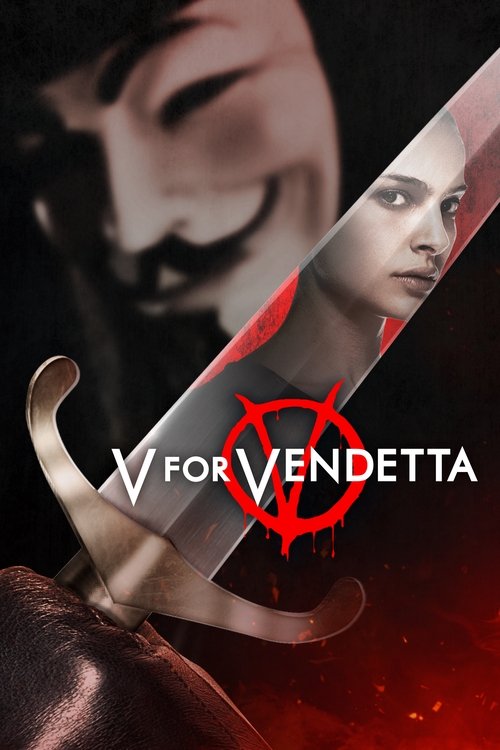
V for Vendetta is a 2006 dystopian political thriller film directed by James McTeigue and produced by the Wachowskis, adapted from Alan Moore and David Lloyd's DC/Vertigo comic book series. The film is set in a near-future fascist Britain where the charismatic masked vigilante known only as V, played by Hugo Weaving, wages a one-man war against the totalitarian Norsefire government while recruiting Evey Hammond, played by Natalie Portman, into his revolutionary cause. V's plan culminates in his promise to destroy the Houses of Parliament on November 5th, the anniversary of Guy Fawkes's failed Gunpowder Plot of 1605, using Fawkes's iconic mask as the symbol of resistance.
Hugo Weaving delivered an extraordinary performance entirely from behind a static mask, conveying emotion through voice, body language, and the subtle angle of his head — a feat of acting that many considered impossible for such a physically expressive actor. Natalie Portman underwent a real head-shaving on camera during a pivotal scene depicting Evey's imprisonment and psychological transformation, a choice that added visceral authenticity to her performance. The Guy Fawkes mask worn by V transcended the film to become one of the most recognized symbols of anti-establishment protest worldwide, adopted by the hacktivist group Anonymous and by demonstrators during the Arab Spring, Occupy Wall Street, and protests against authoritarian governments across the globe.
The film earned $132 million worldwide on a $54 million budget. Alan Moore disavowed the adaptation, though the film has been embraced by audiences as a powerful statement about the dangers of government overreach, surveillance, and the suppression of individual liberty. Its line "People should not be afraid of their governments.
Governments should be afraid of their people" has become one of the most quoted political statements in modern cinema.