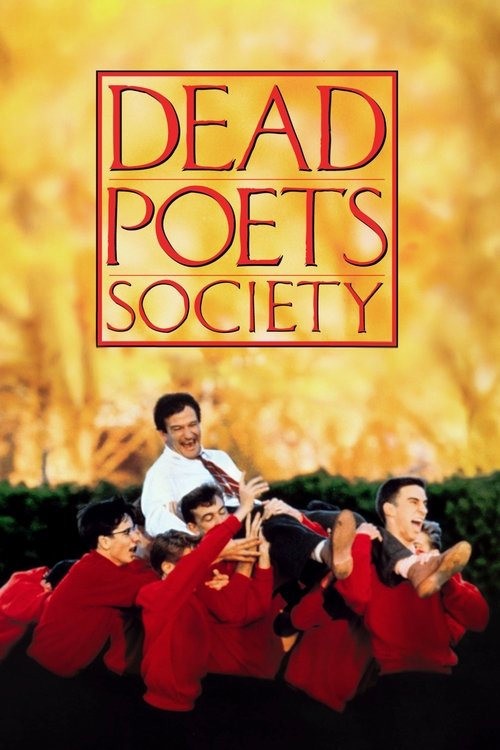
Dead Poets Society (1989)
Where to Watch
- Before Robin Williams was cast, several major A-list stars turned down the lead role because they felt the script was too risky.
- Eagle-eyed viewers have noticed a hidden easter egg referencing Peter Weir's previous film in the background of the opening scene.
- Peter Weir originally wanted a completely different ending for the film, but test audiences preferred the one we see today.
Dead Poets Society is a 1989 American drama film directed by Peter Weir and starring Robin Williams as John Keating, an unorthodox English teacher at the elite, conservative Welton Academy preparatory school in Vermont in 1959. Keating inspires his students to seize the day — "carpe diem" — encouraging them to think independently, question authority, and pursue their passions through literature and poetry. A group of students, led by Todd Anderson played by Ethan Hawke and Neil Perry played by Robert Sean Leonard, are so inspired that they resurrect the Dead Poets Society, a secret club that meets in a cave to read poetry and explore ideas forbidden by the school's rigid traditions.
Robin Williams delivered one of his most restrained and effective performances, channeling his manic energy into a character whose passion for literature and teaching was infectious without descending into the sentimentality that sometimes marred his dramatic work. Peter Weir's direction established a vivid contrast between the oppressive formality of Welton Academy and the liberation that Keating's teaching represents. The film's tragic turn, when the consequences of individual expression collide with authoritarian institutional power, gave the story a devastating emotional weight that elevated it beyond a simple inspirational teacher narrative.
Tom Schulman won the Academy Award for Best Original Screenplay, and the film received three additional nominations including Best Picture. Dead Poets Society earned $235 million worldwide and became a touchstone for educators and students, with "O Captain! My Captain!" becoming one of the most recognized literary references in popular culture.